

What is the HVAC? A Complete Beginner-Friendly Guide to Heating, Ventilation, and Air Conditioning
Introduction
If you have ever walked into a shopping mall, office, hospital, or even a modern home and felt comfortable regardless of the weather outside, then you have already experienced the power of HVAC systems. But what is the HVAC exactly, and why is it so important in modern buildings?
HVAC stands for Heating, Ventilation, and Air Conditioning. It is a system designed to control the indoor environmental conditions of a space. This includes temperature, humidity, air quality, and airflow. Whether it is cooling a room during hot summer days or maintaining fresh air circulation, HVAC systems play a crucial role in providing comfort, safety, and productivity.
In this article, we will break down everything you need to know about HVAC systems, including their components, functions, key parameters, and the refrigeration cycle that powers them.
What is the HVAC?
HVAC is an abbreviation for three main functions:
- Heating
- Ventilation
- Air Conditioning
Each of these components serves a specific purpose, but together they create a complete system that maintains indoor comfort.
Heating
Heating is responsible for raising the temperature of indoor spaces during cold weather conditions. This is typically achieved using heaters, boilers, or heat pumps. The goal is to ensure a comfortable indoor temperature regardless of how cold it gets outside.
Ventilation
Ventilation is the process of exchanging indoor air with fresh outdoor air. It removes stale air, odors, moisture, and contaminants while bringing in clean, fresh air. Proper ventilation is essential for maintaining indoor air quality and ensuring a healthy environment.
Air Conditioning
Air conditioning controls both temperature and humidity levels. It cools the air during hot weather and helps maintain a consistent and comfortable indoor climate. Air conditioning systems also contribute to air purification and circulation.
Why is HVAC Important?
HVAC systems are essential for several reasons:
- Comfort: Maintains a stable indoor temperature and humidity level
- Health: Improves air quality by filtering pollutants and supplying fresh air
- Productivity: Comfortable environments increase focus and efficiency
- Energy Efficiency: Modern HVAC systems are designed to reduce energy consumption
- Safety: Prevents excessive humidity, mold growth, and poor air circulation
Without HVAC systems, indoor environments would be uncomfortable and, in many cases, unsafe.
Key Parameters Controlled by HVAC Systems
One of the main purposes of HVAC systems is to control specific environmental parameters. These parameters directly affect human comfort and indoor air quality.
1. Temperature
Temperature is the most noticeable factor in any indoor environment.
- Typical comfort range: 24°C ± 2°C
- Too high: Causes discomfort and fatigue
- Too low: Leads to cold stress and reduced productivity
HVAC systems regulate temperature using heating or cooling mechanisms depending on the conditions.
2. Humidity
Humidity refers to the amount of moisture in the air.
- Ideal range: 50% ± 5%
- High humidity: Causes discomfort, sweating, and mold growth
- Low humidity: Leads to dry skin, irritation, and respiratory issues
Air conditioning systems play a major role in maintaining proper humidity levels.
3. Filtration
Filtration ensures that the air circulating indoors is clean and free from contaminants.
- Removes dust, pollen, bacteria, and pollutants
- Improves indoor air quality
- Essential in hospitals, offices, and residential buildings
Filters come in different types and efficiency levels depending on the application.
4. Air Distribution
Air distribution refers to how air is delivered throughout a space.
- Ensures even temperature across all areas
- Prevents hot or cold spots
- Achieved through ducts, vents, and diffusers
Proper distribution is critical for maintaining consistent comfort.
5. Fresh Air (Ventilation)
Fresh air supply is essential for a healthy indoor environment.
- Replaces stale indoor air
- Removes odors and harmful gases
- Supplies oxygen-rich air
Without proper ventilation, indoor air can become polluted and harmful.
6. Noise Control
HVAC systems can generate noise due to fans, compressors, and airflow.
- Low noise levels are essential for comfort
- Important in offices, homes, and hospitals
- Achieved through proper design and insulation
Noise control is often overlooked but plays a major role in user experience.
7. Air Velocity
Air velocity refers to the speed of air movement.
- Should be comfortable and not noticeable
- High velocity: Causes drafts and discomfort
- Low velocity: Leads to poor air circulation
Proper air velocity ensures a balanced and pleasant indoor environment.
Understanding the Refrigeration Cycle
At the heart of every air conditioning system is the refrigeration cycle. This is the process that allows HVAC systems to remove heat from indoor spaces and release it outside.
What is the Refrigeration Cycle?
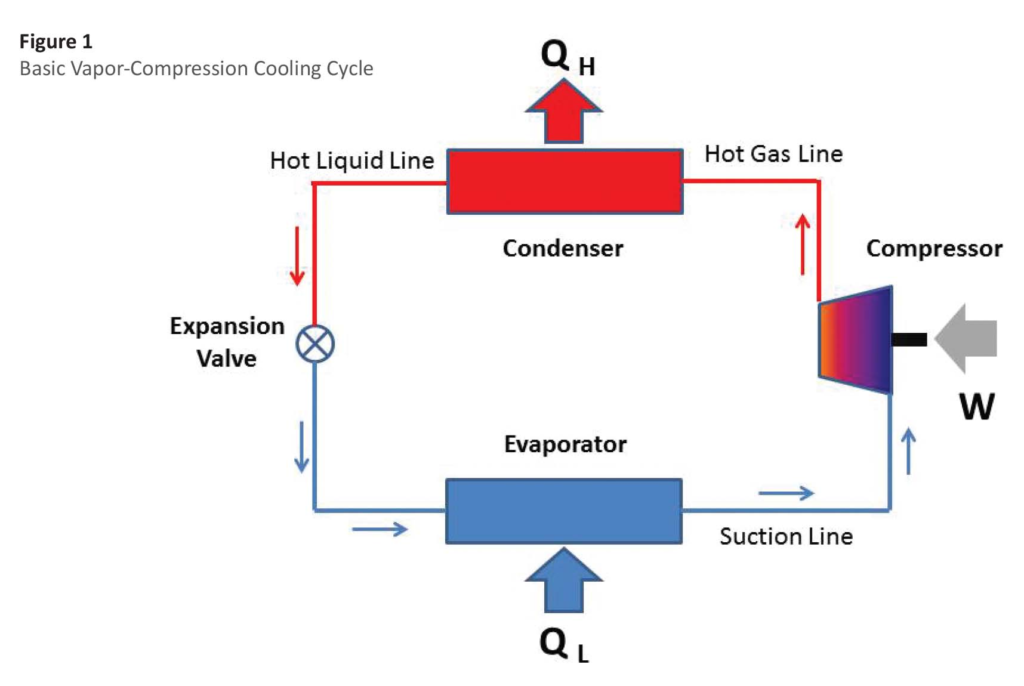
The refrigeration cycle is a continuous process that transfers heat from one place to another using a refrigerant. It is the core principle behind air conditioning systems.
The goal is simple:
Remove heat from inside the building and release it outside.
Main Components of the Refrigeration Cycle
The refrigeration cycle consists of four main components:
1. Compressor
The compressor is the heart of the system.
- Compresses the refrigerant gas
- Increases pressure and temperature
- Moves the refrigerant through the system
2. Condenser
The condenser is where heat is released.
- Located outside the building
- Converts refrigerant from gas to liquid
- Releases heat to the surrounding environment
3. Expansion Valve
The expansion valve controls the flow of refrigerant.
- Reduces pressure of the liquid refrigerant
- Causes temperature drop
- Prepares refrigerant for evaporation
4. Evaporator
The evaporator is where cooling happens.
- Located inside the building
- Absorbs heat from indoor air
- Converts refrigerant from liquid to gas
How the Refrigeration Cycle Works (Step-by-Step)
- The compressor compresses the refrigerant gas, increasing its pressure and temperature.
- The hot gas moves to the condenser, where it releases heat and becomes a liquid.
- The liquid refrigerant passes through the expansion valve, reducing its pressure and temperature.
- The cold refrigerant enters the evaporator, where it absorbs heat from indoor air.
- The refrigerant turns back into gas and returns to the compressor.
This cycle repeats continuously to maintain a cool indoor environment.
HVAC and Energy Efficiency
Energy efficiency is a major concern in modern HVAC systems.
- Reduces electricity consumption
- Lowers operational costs
- Minimizes environmental impact
Technologies such as smart thermostats, inverter systems, and energy recovery ventilation are helping improve efficiency.
Conclusion
So, what is the HVAC?
HVAC is much more than just air conditioning. It is a complete system designed to control indoor temperature, humidity, air quality, and comfort. From heating in winter to cooling in summer, HVAC systems play a vital role in modern life.
Understanding HVAC basics, including key parameters and the refrigeration cycle, is essential for engineers, technicians, and even homeowners. Whether you are learning HVAC for professional growth or planning to work in the industry, mastering these fundamentals is your first step toward success.
As buildings become smarter and more energy-efficient, HVAC systems will continue to evolve, making them one of the most important technologies in the modern world.
If you are just starting your HVAC journey, this is only the beginning. Keep learning, keep practicing, and most importantly—apply what you learn in real-world scenarios.

Pingback: What is the ASHRAE Psychrometric Chart? - Khaled Mohamed